
How Much Is Homeowners Insurance? 2026 Average Costs
Use comparable quotes and policy documents to evaluate homeowners insurance for your property.

Key takeaway
A practical guide to reviewing homeowners policy documents and settlement concepts.
Homeowners coverage differs by policy and circumstances. A title or coverage label cannot establish a universal list of benefits, dollar limits, exclusions, or deductible rules. Review the documents your insurer provides and ask how they apply to your home before making a coverage decision.
TL;DR: Review the documents your insurer provides and ask how your policy applies to your circumstances. Actual cash value and replacement cost are different settlement concepts (NAIC, What’s the Difference Between Actual Cash Value Coverage and Replacement Cost Coverage?).
Review the documents your insurer provides together and make a list of questions about any unfamiliar entry. Ask the insurer or a licensed agent for an explanation before assuming what it covers.
The NAIC explains that actual cash value and replacement cost are different settlement approaches. Actual cash value takes depreciation into account; replacement-cost coverage is intended to address the cost to replace covered property, subject to the policy terms (NAIC, What’s the Difference Between Actual Cash Value Coverage and Replacement Cost Coverage?).
That difference does not tell you how every homeowners policy settles every item. Ask the insurer how the settlement approach applies to your policy and the property at issue.
At renewal, compare the current policy documents with the prior term and make a list of questions before payment is due:
Do not rely on a generic exclusion list, a premium average, or a claim statistic to decide whether your policy responds. Ask the insurer how your policy applies to the facts of the loss.
Actual cash value and replacement cost are distinct settlement concepts. Actual cash value takes depreciation into account, while replacement-cost coverage is intended to address the cost to replace covered property, subject to the policy terms (NAIC, What’s the Difference Between Actual Cash Value Coverage and Replacement Cost Coverage?).
Ask the insurer how the settlement approach applies to your policy and potential loss.
This article is for general informational purposes only and does not constitute financial, legal, or insurance advice. Coverage terms, limits, deductibles, exclusions, and settlement methods vary by policy, carrier, state, and individual circumstances. Review your own policy documents or speak with a licensed insurance agent before making coverage decisions.
Use comparable quotes and policy documents to evaluate homeowners insurance for your property.
Compare what HO-6 and renters insurance cover for a unit and personal belongings.
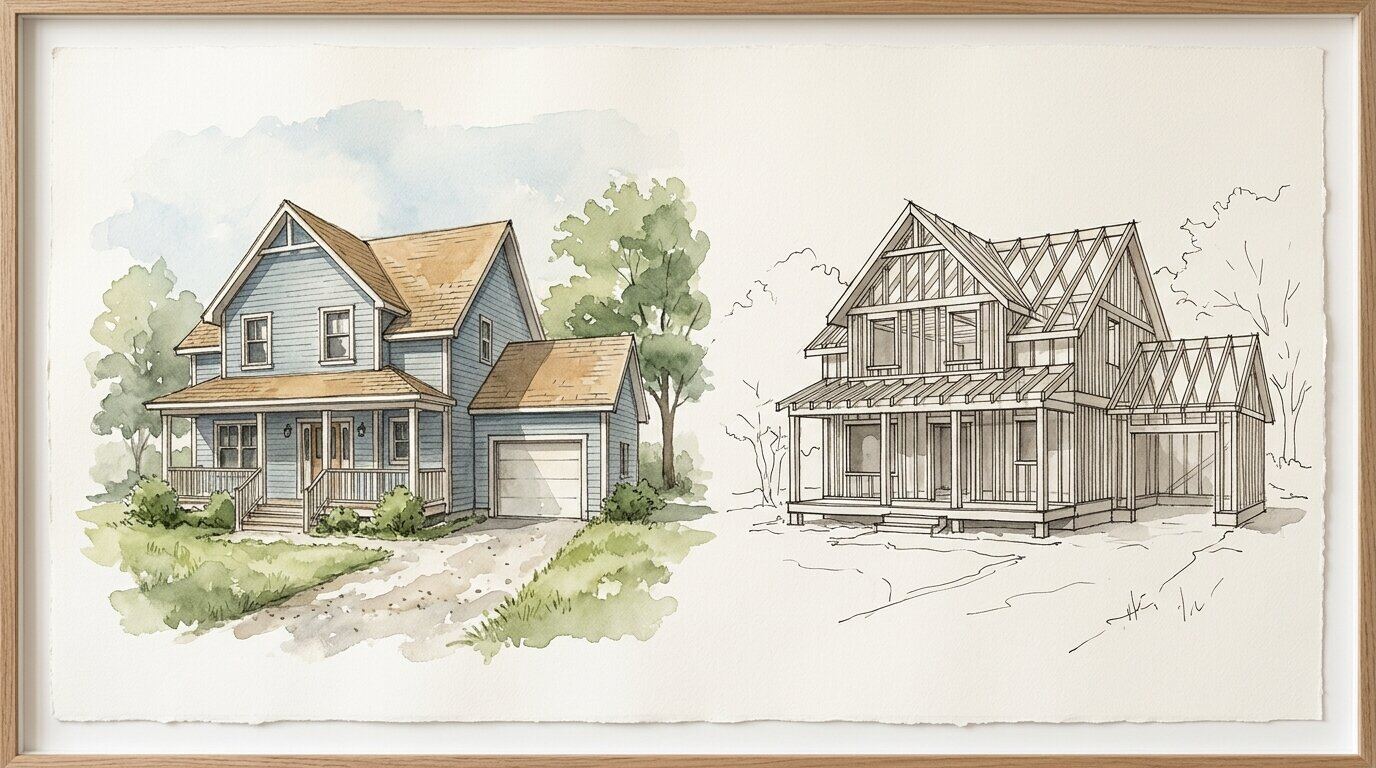
Compare rebuild cost and market value, and learn why a low dwelling limit can reduce a claim payout.