
How Much Is Homeowners Insurance? 2026 Average Costs
Use comparable quotes and policy documents to evaluate homeowners insurance for your property.
Key takeaway
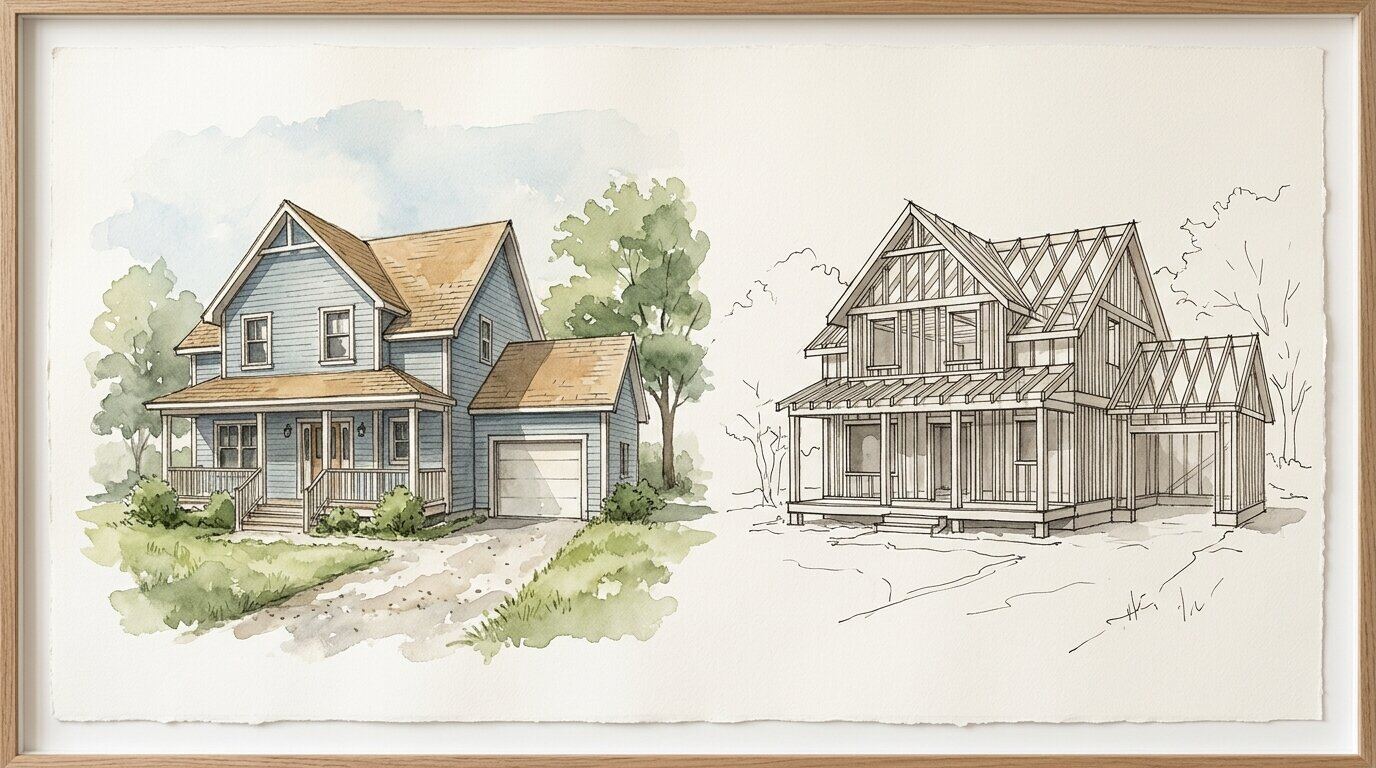
Compare rebuild cost and market value, and learn why a low dwelling limit can reduce a claim payout.
A homeowner can compare a dwelling limit with a real-estate estimate and assume the policy is underinsured. The comparison may not answer that question: dwelling coverage and market value measure different things, so the policy’s rebuilding basis is the better starting point.
TL;DR: Dwelling coverage is tied to the cost to repair or replace covered property, not the price a buyer would pay. NAIC notes that market value includes the price of land and depends on the real-estate market (NAIC). If your policy includes a coinsurance clause, read its required coverage amount and calculation before you assume your limit will meet every loss.
Dwelling coverage is the part of a homeowners policy used for the structure. Replacement-cost coverage pays the cost to repair or replace damaged property with materials of like kind and quality; the policy form determines the covered property, limits, and conditions (NAIC).
Market price is not a substitute for the rebuilding basis in an insurance policy. NAIC distinguishes replacement cost from a home's market value, which includes the price of land and depends on the real-estate market (NAIC). Ask the insurer how it estimated the dwelling limit and compare that estimate with your policy documents.
For a full breakdown of what dwelling coverage sits alongside in a standard policy, see our guide on what homeowners insurance actually covers.
Market value and replacement cost measure different things: market value includes land and moves with the real-estate market, while replacement-cost coverage addresses the cost to repair or replace damaged property under the policy (NAIC). The figures can differ, so use the policy's rebuilding basis rather than a sale-price estimate when reviewing a dwelling limit.
The difference can be significant when a home's construction needs do not track local sale prices. Treat the number as a coverage-planning question, not as evidence that either the policy or the market price is automatically wrong.
For example, a home on a high-value lot can have a market price that is much higher than the construction amount used in a dwelling estimate. The figures in any such comparison are illustrative; the applicable limit and settlement basis come from the policy and the insurer's estimate.
A rebuild estimate should be reviewed with the insurer or a qualified construction professional. The policyholder's task is to understand what estimate the insurer used and whether a remodel or other change makes that estimate stale.
After a renovation, ask the insurer whether the dwelling limit and any related coverage need to be reviewed. Do not assume a resale appraisal, tax assessment, or mortgage balance answers that question.
Reconstruction can raise questions about local building rules and policy limits. Check the policy form and any endorsements before assuming a particular upgrade, removal cost, or extra expense is covered. Our guide on how to read a declarations page can help you locate the stated limits.
Rebuild cost, market value, and assessed value are different concepts. Review the policy's rebuilding basis and dwelling limit rather than treating one value as a substitute for another.
| Number | What it includes | Who produces it | What it's used for |
|---|---|---|---|
| Replacement-cost basis | Cost to repair or replace covered property under the policy | Insurer and policy documents | Reviewing a dwelling limit |
| Market value | Includes land and depends on the real-estate market | Real-estate market information | Considering a sale or purchase |
| Assessed value | Estimated value for real or personal property established by a taxing entity ([NAIC glossary](https://content.naic.org/glossary-insurance-terms)) | Taxing entity | As established by that entity |
NAIC defines assessed value as an estimated value for real or personal property established by a taxing entity (NAIC glossary). It does not establish the replacement-cost basis in an insurance policy, so review the dwelling limit with the insurer.
NAIC defines coinsurance as a clause in most property policies that encourages policyholders to carry a reasonable amount of insurance. It says that, if the insured does not maintain the amount specified in the clause—usually at least 80%—the insured shares a higher proportion of the loss (NAIC glossary). The exact percentage, conditions, and calculation come from the policy form, so do not assume every policy uses the same terms.
The source set does not establish a universal payment formula for coinsurance. If your policy has this condition, ask the insurer how its calculation works for a partial loss and keep the answer with your policy documents.
Replacement-cost provisions, extensions, and automatic adjustments are policy-specific. Review the applicable endorsement language and ask the insurer what happens if reconstruction costs exceed the stated dwelling limit.
Run through this checklist at every renewal, not just when you first buy the home:
For context on how each of these coverage moves affects your premium, see our guide on how much homeowners insurance costs by coverage tier.
Dwelling coverage and market value can differ because market value includes land and follows the real-estate market, while replacement-cost coverage addresses repair or replacement under the policy (NAIC). Review the insurer's rebuilding basis and your actual dwelling limit instead of relying on a real-estate or tax figure.
If the policy contains a coinsurance clause, it may require the insured to share a higher proportion of a loss when the stated coverage amount is not maintained (NAIC glossary). Review your Coverage A limit and the policy conditions at renewal and after a renovation. For how these numbers interact with your policy's other coverages, see our guide on what homeowners insurance actually covers, and if you're weighing depreciation on belongings alongside your dwelling limit, our guide on actual cash value vs. replacement cost explains the related settlement concepts.
This article is for general informational purposes only and does not constitute financial, legal, or insurance advice. Coverage terms, limits, and pricing vary by carrier, state, and individual circumstances. Review your own policy documents or speak with a licensed insurance agent before making coverage decisions.
Use comparable quotes and policy documents to evaluate homeowners insurance for your property.
Compare what HO-6 and renters insurance cover for a unit and personal belongings.

A practical guide to reviewing homeowners policy documents and settlement concepts.