
How Much Is Car Insurance per Month? 2026 Rates Explained
See how coverage choices, deductibles, and your own quote details can change a monthly car insurance rate.
Key takeaway
See the limited source-backed rules for windshield claims, deductibles, Kentucky glass coverage, and ADAS calibration.
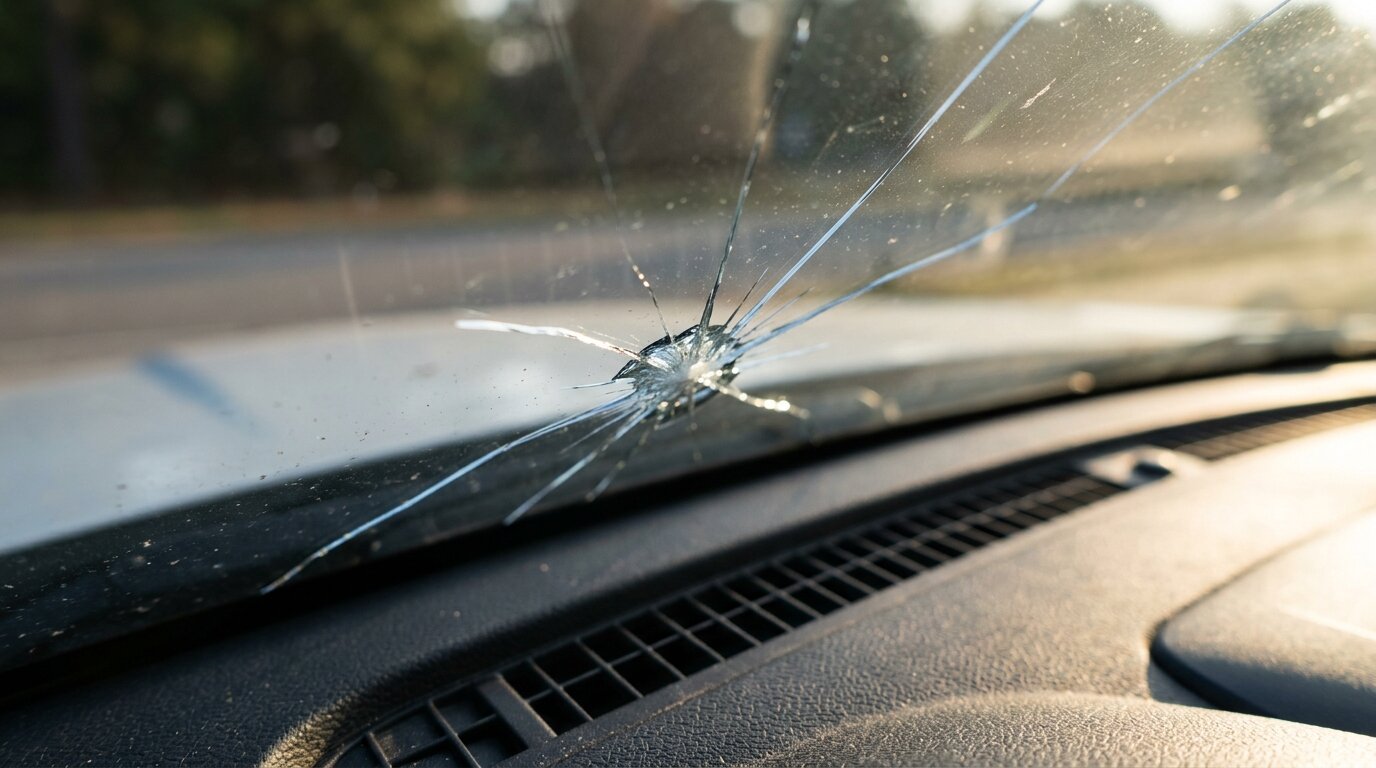
A windshield claim needs two separate answers: what coverage your policy carries and whether a state-specific rule changes the result. The NAIC Consumer’s Guide to Auto Insurance says comprehensive coverage reimburses a windshield that is pitted, cracked, or damaged. It does not make every policy or every state rule the same.
TL;DR: The NAIC says comprehensive coverage can reimburse a damaged windshield, and that some companies do not charge a deductible for windshield repairs. Kentucky has a separate statute for qualifying motor-vehicle-glass-only claims. Read your policy and confirm the claim details before authorizing work.
The NAIC guide describes comprehensive coverage as reimbursement for damage to a car that is not caused by a collision, including a windshield that is pitted, cracked, or damaged (NAIC Consumer’s Guide to Auto Insurance). It also says that some companies will not charge a deductible for windshield repairs.
Those statements do not establish a universal repair-versus-replacement rule, an endorsement, or a rate outcome. Check the declarations, endorsements, exclusions, and the insurer’s written claim estimate for the policy you actually bought.
The NAIC defines a deductible as the amount paid out of pocket on a claim before the policy pays the loss (NAIC Consumer’s Guide to Auto Insurance). Ask the insurer which deductible applies to this loss and whether the written estimate treats the work as repair or replacement.
Do not infer a deductible waiver from a different vehicle, insurer, or state. The source set supports only the NAIC’s statement that some companies do not charge a deductible for windshield repairs.
Kentucky’s KRS 304.20-060 applies to a motor-vehicle insurance policy issued by an admitted or nonadmitted carrier that provides comprehensive or other-than-collision coverage. When the claim is for motor vehicle glass only, the statute requires complete coverage for repair or replacement without regard to a deductible or minimum amount.
That is a Kentucky statute with a defined policy and claim scope. It is not evidence of a rule in another state or of a term in a policy that falls outside the statute’s conditions.
For a first-party claim for repair or replacement of damaged motor vehicle glass, KRS 304.20-060 says an insured cannot be required to use a particular motor vehicle glass repair shop to receive claim payments or other policy benefits (KRS 304.20-060). Provide the claim number and ask the insurer to explain the available options in writing.
The statute’s wording should be read with the policy and the facts of the claim. This article does not extend it to another jurisdiction.
KRS 304.20-060 defines repair or replacement of damaged motor vehicle glass to include calibrating or recalibrating an advanced driver assistance system when an incident requires replacement of damaged glass (KRS 304.20-060). The statute defines an advanced driver assistance system as an electronic safety system intended to support the driver and vehicle.
Ask the repairer and insurer whether the incident requires replacement and whether this statutory definition applies to your Kentucky claim. The available source does not establish a universal recalibration process, price, or coverage rule outside that context.
This keeps the decision tied to the policy and the applicable statute rather than to a broad rule of thumb.
See how coverage choices, deductibles, and your own quote details can change a monthly car insurance rate.

Use source-backed guidance to separate a direct animal strike from questions your policy and insurer must answer.

Read the notice, identify the governing jurisdiction, and confirm the policy end date before making coverage decisions.